

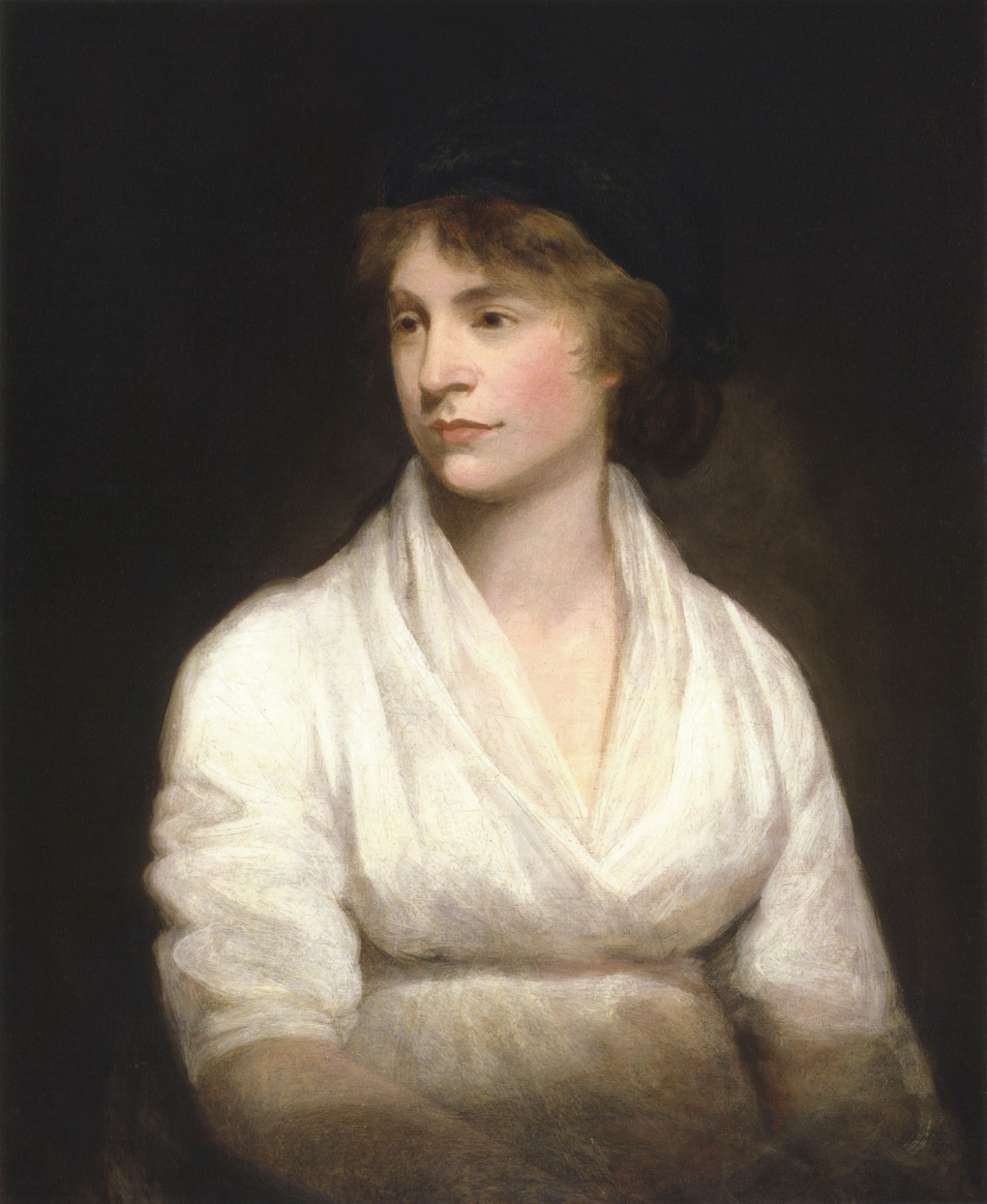
Mary Wollstonecraft: The Woman Who Challenged the 18th Century

In 1792, a 33-year-old Englishwoman with almost no formal schooling published a book that told the most educated men of her time they were wrong about half of humanity. Women, Mary Wollstonecraft argued, were not naturally weaker in mind. They had simply never been allowed to use it.
The book was A Vindication of the Rights of Woman, and more than two centuries later it still reads like a challenge. Wollstonecraft didn’t ask for women to be protected, pitied or placed on a pedestal. She asked for something harder and more radical: that they be treated as responsible adults, free to think, to work and to run their own lives.
“I do not wish them to have power over men; but over themselves.”
Mary Wollstonecraft, A Vindication of the Rights of Woman
That is why she belongs at the start of any conversation about women and liberty.
Her life
Wollstonecraft’s ideas didn’t come from a library. They came from experience: from watching what happened to women who had no money, no education and no way out.
Click a date to learn more.
1759Born in London
Mary was born in Spitalfields, London, on 27 April, the second of seven children. Her father drank and squandered the family’s money, and young Mary saw early what it meant for a woman to depend entirely on a man.
1784A school of her own
With her sisters and her close friend Fanny Blood, she opened a small school at Newington Green, near London. There she met the minister Richard Price, whose circle of reformers shaped her thinking about rights and reason.
1786Governess in Ireland
After the school closed, she took a job as a governess to an aristocratic family in Ireland, one of the few respectable jobs open to an educated woman without money.
1787“The first of a new genus”
She published her first book, Thoughts on the Education of Daughters, and moved to London to work for the publisher Joseph Johnson. Earning a living by her pen was almost unheard of for a woman at the time. In a letter to her sister, she called herself “the first of a new genus.”
1790Answering Burke
She wrote A Vindication of the Rights of Men, one of the first replies to Edmund Burke’s attack on the French Revolution, and a defense of the idea that rights belong to people by nature.
1792The Rights of Woman
She published A Vindication of the Rights of Woman, then travelled alone to Paris to see the Revolution for herself.
1796Letters from Scandinavia
She published Letters Written during a Short Residence in Sweden, Norway, and Denmark, a travel book that became one of her most popular works.
1797Her final year
She married the philosopher William Godwin. On 30 August she gave birth to a daughter, Mary, who would grow up to write Frankenstein. Wollstonecraft died of complications from the birth on 10 September, at 38.
Her big ideas
Women are rational beings
In Wollstonecraft’s time, it was common to say that women were creatures of feeling, charming but not quite capable of serious thought. She rejected that completely. If women seemed frivolous, she argued, it was because they had been raised to please rather than to think. Change the education, and you change the result.
“Strengthen the female mind by enlarging it, and there will be an end to blind obedience.”
Freedom means governing yourself
Wollstonecraft was not interested in replacing one form of domination with another. What she wanted for women was the same thing every free person wants: control over her own life, her own choices and her own conscience.
“It is time to effect a revolution in female manners.”
Independence needs a way to earn a living
Wollstonecraft knew that many women married simply because they had no other way to survive. Real freedom, she believed, required the chance to work and support yourself. She imagined women as doctors, farmers and shopkeepers, at a time when almost every door was closed to them.
“How many women thus waste life away the prey of discontent, who might have practised as physicians, regulated a farm, managed a shop, and stood erect, supported by their own industry.”
Equality makes virtue possible
A relationship where one person holds all the power, Wollstonecraft argued, corrupts both sides. Marriage, friendship and citizenship work best between people who respect each other as equals.
“Virtue can only flourish amongst equals.”
Why she belongs in the story of liberty
Wollstonecraft is often remembered as a founder of feminism, and she was. But her arguments rest on the same foundations as the broader tradition of liberty.
She was deeply influenced by John Locke, who argued that people are born with the capacity to reason and with natural rights that no ruler can take away. Wollstonecraft simply refused to accept that those rights stopped at half of the population. If liberty belongs to every rational person, then it belongs to women too.
Her vision of freedom was also strikingly individual. She didn’t ask the state to manage women’s lives on their behalf. She asked for the obstacles to be removed, so that each woman could think for herself, earn her own living and choose her own path. Independence, responsibility and self-government run through everything she wrote.
That combination makes her one of the earliest voices in a long line of women who saw that the case for women’s freedom and the case for human freedom are, in the end, the same case. A century and a half later, three American women would pick up that thread.
Where to start reading her
- A Vindication of the Rights of Woman (1792). Her masterpiece. You don’t need to read it cover to cover: chapters 2, 4 and 9 hold most of her central arguments.
- Letters Written during a Short Residence in Sweden, Norway, and Denmark (1796). The most personal and accessible of her books, and a good way to meet the woman behind the ideas.
- Romantic Outlaws by Charlotte Gordon (2015). A highly readable double biography of Wollstonecraft and her daughter, Mary Shelley.
Keep the conversation going
Wollstonecraft believed that women grow stronger when they think, read and argue together. At LOLA, women in cities around the world do exactly that: they meet to discuss ideas, share experiences and support each other as leaders. Joining is free.
Sources
- Mary Wollstonecraft, Stanford Encyclopedia of Philosophy
- Mary Wollstonecraft, Biography.com
- Equal Rights: Mary Wollstonecraft, Libertarianism.org
- A Vindication of the Rights of Woman, Mary Wollstonecraft (1792)