

The Left’s Fatal Conceit
Letícia Barros
October 16, 2026
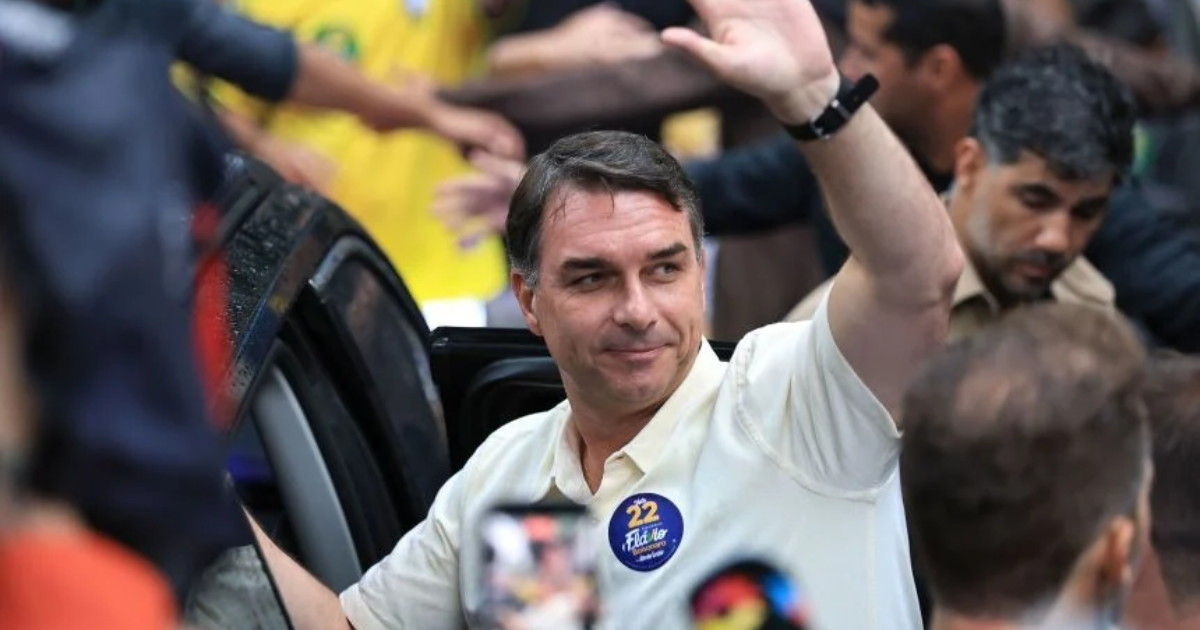
Flávio Bolsonaro’s victory with 47% of the vote in the first round was a bucket of cold water for the left. Proof of this is the desperation of Lula’s voters on social media to convince the public to vote for Lula. Some say the left’s mobilization strategies, whether organic or systematic, are strong enough to flip undecided votes. And there are those who, like me, believe they are the weapon that will kill the Workers’ Party at the ballot box.
Over the past few weeks, social media has been flooded with fictional scenarios created by Lula supporters: concentration camps for minorities, the end of women’s suffrage, the end of the SUS (the public health system) and of Bolsa Família. The scare-tactic strategy had the opposite of its intended effect. The posts became memes of all kinds and a source of mockery even among those who do not consider themselves “Bolsonaristas.” Like a child who swears there is a monster under the bed, the left lives terrified of the “hypothetical Bolsonaro.”
The 2026 elections laid bare something that has long been part of the political debate and that the campaign merely brought to the surface. The left lives in a fantasy world, where it holds a monopoly on goodness and morality. Anyone who disagrees with it, however slightly, is demoted to the worst of humanity: fascist, Nazi, selfish, alienated. The other side has become the enemy that conspires against the poor, women, Black people, gays, and all the other groups in the category of the oppressed that it created itself.
Two terms frequently used to disqualify the political choices of those who do not think alike are “right-wing poor person” and “CEO of an MEI” (a registered micro-entrepreneur). There is no need to get into the question of political strategy, because it is perfectly clear that these terms push these voters away more than they draw them in. What is truly outrageous is the thesis of those who use them: the poor are virtuous only as long as they vote “correctly.” When they choose otherwise, they become deceived and alienated. It is rather ironic that precisely those who claim to defend the poor not only want to decide for them, but also judge them completely incapable of critical thinking.
In his book The Fatal Conceit: The Errors of Socialism, the economist Friedrich Hayek brilliantly conceptualizes the “fatal conceit.” For him, it is the belief that a few people, armed with reason and good intentions, know better than millions of people how each of them should live. His critique was aimed at the central planning advocated by socialists. Hayek said that knowledge is always dispersed throughout society, never concentrated in a small group of bureaucrats or individuals.
No term better characterizes what the left has been doing in this period: it is the fatal conceit that makes it climb onto a pedestal and proclaim, in a dictator’s voice, that its plans are bigger and better for the “right-wing poor person.” For it, it is inconceivable that the poor think differently. Its proposals would be the only way to bring dignity to the poor, which, ironically, are the very ones that keep them forever in the SUS queue and dependent on Bolsa Família.
On the other hand, right-wing voters who cannot be demoted to alienated poor people get another label: fascist. Gleisi Hoffmann, former president of the PT, said in 2018 that Jair Bolsonaro was worse than Hitler. Lula, in 2022, compared him to Mussolini and Hitler. In 2026, the base followed its leaders: PT voters are spreading images of Flávio Bolsonaro with Hitler’s mustache and a swastika stamped on him. The same pattern repeats with everyone who declares a vote for Flávio: they become as fascist as their leaders.
In 1946, in the essay “Politics and the English Language,” George Orwell had already observed that the word “fascism” no longer meant anything more than “something not desirable.” For him, the degradation of language had a purpose. Empty words spare us the effort of thinking, and political language exists to make lies sound truthful. It is easier to use a term that ends the discussion than to engage in the discussion. And worse: it trivializes a cruel and inhuman ideology.
Those who believe themselves the owners of morality do not need arguments, only labels. That is why the left does not debate, it merely classifies. On one side, the good, the enlightened, the defenders of the oppressed. On the other, the alienated, the selfish, the fascists. A goodness that despises the poor when they think differently has another name: fatal conceit. And it is precisely this conceit that will kick Lula out of the presidential chair.