

The Biological Clock in Check
Izabela Patriota
July 3, 2026
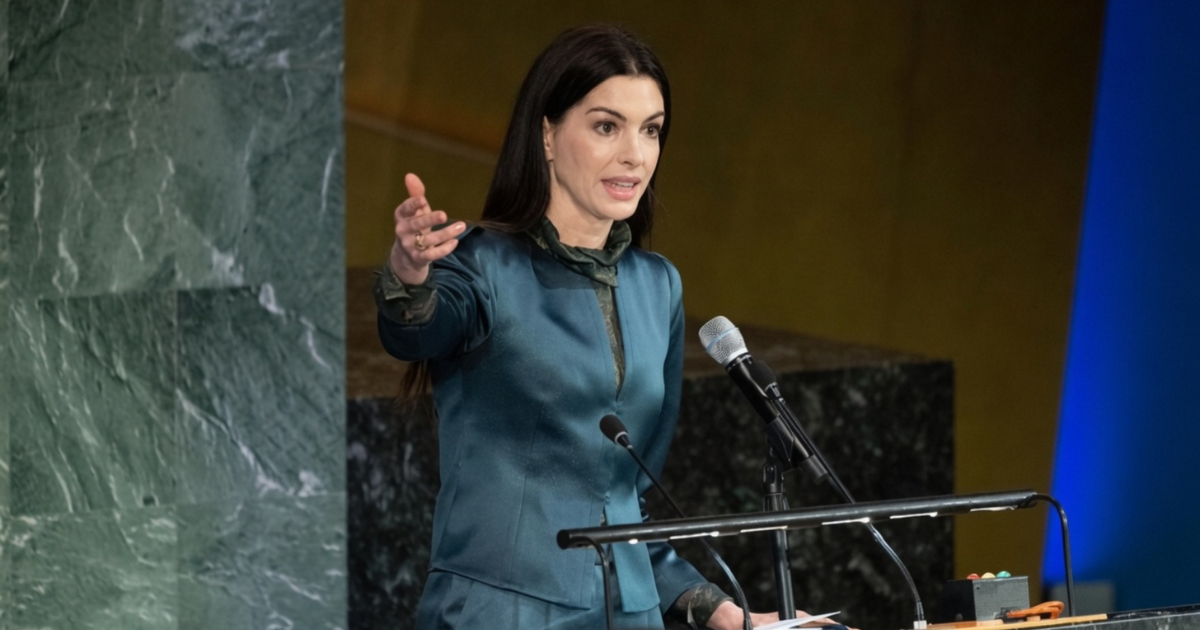
Actress Anne Hathaway announced, on June 20th, that she is pregnant with her third child at age 43. One might have expected the news to be celebrated, especially at a moment when we are witnessing the expansion of pronatalist movements warning about the so-called “demographic winter” and arguing that the West needs to start having more children again.
That concern has stopped being merely rhetorical. Influenced by this debate, the Trump administration approved one of the most ambitious pro-natality policies in recent years: the creation of so-called Trump Accounts. Every American child born between 2025 and 2028 receives an initial contribution of $1,000 from the federal government into an investment account, to which parents, family members, and employers can add funds throughout childhood. The policy seeks to simultaneously address the decline in birth rates and encourage wealth-building from birth.
However, Hathaway’s pregnancy was also treated as irresponsible, selfish, and even harmful to the child itself. In an article published in the Free Press two days after the announcement, Kara Kennedy examined precisely this contradiction. Sectors that spend the year lamenting falling birth rates seem to change their tune when the pregnant woman doesn’t fit the idealized model of young, docile, chronologically convenient motherhood.
The question, then, is inevitable: what do pronatalists actually want?
If the concern were purely demographic, an adult woman — married, financially stable, and already a mother of two — should be seen as part of the solution. But apparently, not all motherhood counts. Only the kind that follows the approved script.
This is where the discourse stops being about birth rates and becomes about control.
In an article published in this same Crusoé in May, titled “When Motherhood Stops Being an Accident,” I showed that, for the first time in American history, women over 40 had more children than teenagers did. That data reveals how motherhood has stopped being a consequence and become a choice.
For a long time, pregnancy came before financial stability, before completing an education, and often before women’s own autonomy. Today, in freer and more prosperous societies, many women study longer, build careers, accumulate assets, and only then decide to start a family. What some interpret as a rejection of motherhood may mean exactly the opposite: they still want children, but they want to decide when. That was the case with Hathaway.
Of course, female fertility declines with age, pregnancy after 40 still requires closer medical monitoring, and not every woman will be able to get pregnant at that stage of life. Acknowledging these risks, however, is very different from turning age into a moral judgment.
History itself puts this indignation into perspective. Before modern contraception, women frequently had children until the end of their fertile years. What’s new isn’t a 43-year-old woman getting pregnant. What’s new is that, now, she can decide when.
Anne Hathaway didn’t defy biology — she defied the idea that there is a mandatory timeline for women’s lives. One cannot advocate for public policies to encourage births, lament falling fertility rates, and at the same time condemn a pregnancy simply because it happened at age 43.
At its core, part of the pronatalist movement doesn’t seem to want just more children. It wants more children born to the right women, at the right age, in a way deemed socially acceptable. When that happens, the debate stops being about birth rates and becomes about who controls the clock on motherhood.
Originally published in Portuguese by Crusoé.