

I hope my own sex will excuse me.
María Eugenia Gómez Arias
October 2, 2026
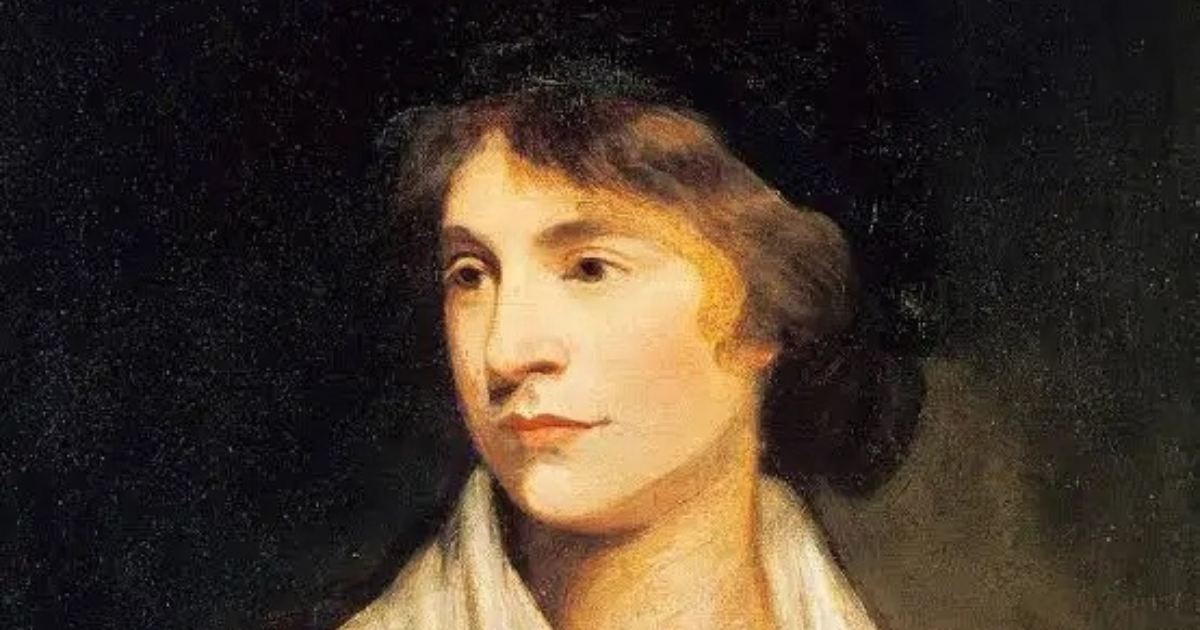
“I hope my own sex will excuse me, if I treat them like rational creatures, instead of flattering their fascinating graces, and viewing them as if they were in a state of perpetual childhood, unable to stand alone.”
Mary Wollstonecraft (1792).
Two hundred thirty-four years later, I have to ask for the same permission. I am a woman, I am a libertarian, and yes, I am a feminist, a liberal feminist, because the only equality that exists, the only one possible and the only one worth defending, is equality before the law. The rest I leave aside: for me, it is important to reason.
And reasoning today requires saying something many women do not want to hear: contemporary feminism has lost its subject of rights. It has lost it because it is incapable of even defining it. What is a woman? An adult female with XX chromosomes. And if that definition is uncomfortable, the problem is not biological: it is ideological.
A movement that cannot define whom it defends defends no one: it defends an idea of itself.
Mary Wollstonecraft did not ask for protection: she asked for reason. She wrote: “I wish to persuade women to endeavour to acquire strength, both of mind and body.” She did not say privileges, she did not say quotas, she did not say subsidies. She said strength! Of mind and body.
Today the State treats us as mentally disabled. As if we needed its constant presence, its outstretched hand, its perpetual guardianship in order to develop. Forgive me, but I do not believe it. I do not in the slightest consider it necessary for someone or something to hold me up so that I can do what I want to do.
Equality does not consist of giving me what another has because I do not have it: it consists of letting me do the things needed to achieve it, if that is what I want. That difference between receiving and conquering is what separates a free woman from a dependent one. And it is the difference that contemporary feminism has insisted on erasing.
Today’s feminism is no longer a movement in favor of women: it is a Trojan horse against men. A political instrument dressed up as a social cause, which exchanged reason for resentment and individual freedom for collective dependence.
Wollstonecraft anticipated it with a clarity that hurts: “Those beings who are only the objects of pity and that kind of love, which has been termed its sister, will soon become objects of contempt.” That is exactly what is happening. Every time a woman accepts being treated as a permanent victim of the system, she does not free herself: she degrades herself. And in doing so, she also degrades those of us who decided not to ask permission to think.
Material equality is impossible, and equality of opportunity even more so! We are all different, and that is not a tragedy: it is the very condition of freedom. Material equality is attainable only in one economic system, and that system is called “communism,” which is the same as misery divided into equal parts.
Ayn Rand said it with a precision that admits no reply: “In a capitalist society, all human relationships are voluntary. Men are free to cooperate or not, to deal with others or not, as their own individual judgment, convictions, and interests dictate.” That is the society we should be claiming: one where a woman does not need anyone to open the door for her, only for no one to close it on her.
Gender quotas are the perfect monument to the failure of this logic!
Whenever the State tries to solve a problem with an unmistakably well-meaning intention, it does so badly. Because it is unnatural, because it is illegitimate, because it substitutes arithmetic for merit and category for ability. A woman who reaches a position through a quota does not represent women: she represents the system that decided she could not get there on her own.
And don’t come to me with the stupid excuse that the criticism is because of our sex. No, it is not because of sex: it is because of the abandonment of the capacity to reason without anyone else’s help. A muscle that is not exercised atrophies. And many of the women who today fill their mouths with “sisterhood” and “gender struggle” embody nothing more than an atrophied muscle of thought, comfortable in their dependence and furious at anyone who dares to point it out.
Wollstonecraft wrote something that should be engraved at the entrance of every congress, every ministry, and every university on this continent:
“Dismissing then those pretty feminine phrases, which the men condescendingly use to soften our slavish dependence, and despising that weak elegancy of mind, exquisite sensibility, and sweet docility of manners, supposed to be the sexual characteristics of the weaker vessel, I wish to show that elegance is inferior to virtue.”
Elegance is inferior to virtue, and virtue begins where excuses end.
We are not subjects of condescension. We are not fragile creatures who need state protection to survive in the world. We are not an electoral bloc to which crumbs disguised as rights are handed out. We are rational beings! And woman became free on the exact day she became responsible for her actions. We do not have to blame anyone else today for what happens to us. That is what is logical: that is what a free and rational woman should defend.
We cannot afford the luxury of ignoring politics, of being recipients of mere clientelism, incapable of thinking, criticizing, and reasoning; of becoming the laughingstock of entire nations and delegitimizing what we are: adult women. That is political. And although many of those who gain access through quotas do not notice it today, believe me: soon they will not be able to escape its consequences.
Wollstonecraft closed her vindication with these words:
“I love man as my fellow; but his sceptre, real, or usurped, extends not to me, unless the reason of an individual demands my homage; and even then the submission is to reason, and not to man.”
Let woman acquire character. I know I am ambitious in the face of the sweet, servile, comfortable dependence of some, wrapped in hatred beneath the veils of “heteropatriarchy” and “gender struggle.” I know Wollstonecraft was too. That is why she ended up calling what she set down “dreams of utopia.” And she answered with a phrase that today, 234 years later, remains the most subversive one a woman can utter:
“I thank that Being who impressed them on my soul, and gave me sufficient strength of mind to dare to exert my own reason.”