

Enough with the five hectares limit
Angela Arnante
October 5, 2026
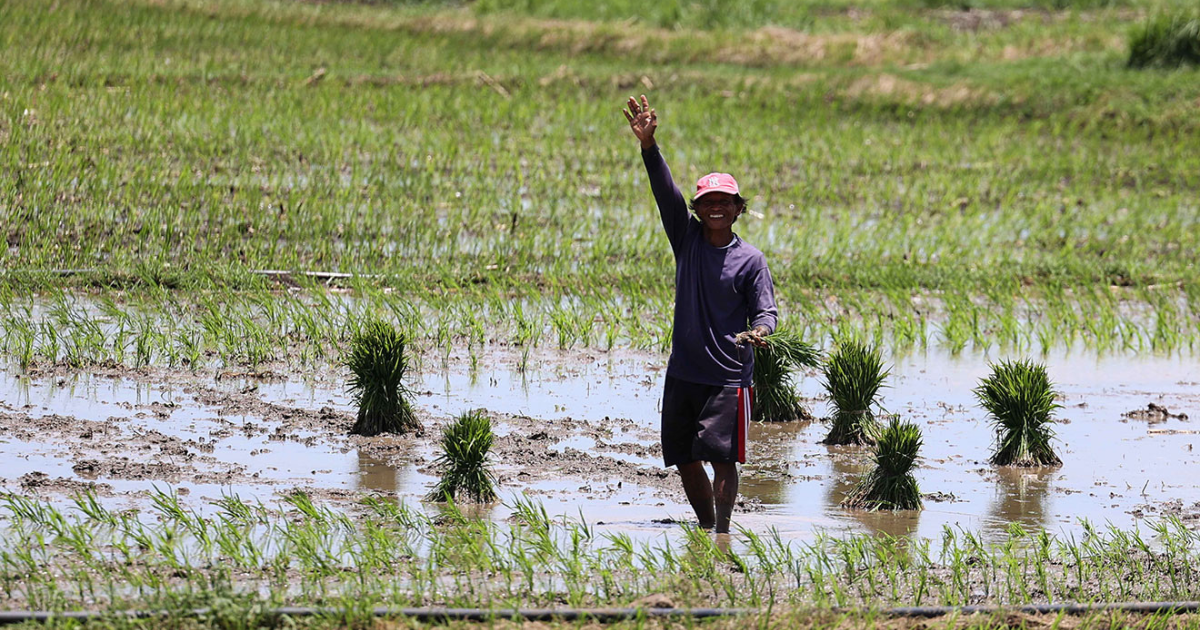
IMAGINE you are a farmer who started small, worked the land for years, improved your yields, built a market, invested in equipment, and finally reached the point where you are ready to expand.
Then an almost four-decade-old law tells you the five hectares you own is enough.
That is the problem confronting the productive farmers and agricultural cooperatives in the Philippines. The Comprehensive Agrarian Reform Program (CARP) places a cap on the size of land you can own. You are bound by a legal threshold, not by what makes economic sense for your farm.
Good thing, the Department of Justice (DoJ) has opened the door for change. DoJ Opinion No. 16, s. 2026 concluded that the statutory period for land acquisition and distribution under the CARP ended on June 30, 2014. It further found that the five-hectare retention limit no longer provides a legal basis for requiring a Department of Agrarian Reform (DAR) Land Transfer Clearance for agricultural land transactions covered by the said opinion.
REFRAME
The debate over agricultural land restrictions is often framed as a contest between small farmers and large landowners. Remove the restriction, the argument goes, and land consolidation will spiral out of control, food security will suffer, and small farmers will be pushed aside. One may describe that take as a “zombie apocalypse” or “world-ending” scenario when it is not.
Also, such framing is too simplistic. It overlooks an important group — the farmers who started small, became successful, and now want to grow. Is it correct for the law to prevent them from expanding when they have the capacity, resources, and experience to do so?
During consultations with some agrarian reform beneficiaries (ARBs), they shared that a higher landholding ceiling could benefit them, especially if they have the capacity to manage larger farms. Many believed more land could mean more production and income, while larger operations could make it more practical to invest in machinery, better inputs, and farm facilities.
Giving farmers more freedom over their lands does not automatically mean they want to sell it. The ARBs generally valued their land highly and said they would consider selling only in exceptional circumstances, often only in portions. Leasing or mortgaging was more acceptable to many. Some ARBs were more comfortable with allowing other farmers and cooperatives to expand than with extending the same treatment to corporations, which they feared could crowd out individual farmers.
BOLSTER UP
Philippine farms have become dramatically smaller over time. The average farm size fell from 3.61 hectares in 1970 to just 0.82 hectare in 2022, a decline of 77.4%. Agriculture, forestry, and fishing have also remained a relatively small and declining share of the economy, falling from 9.6% of GDP in 2021 to 7.9% in 2025, at constant 2018 prices.
Farm size is not the only reason for weak agricultural performance. Productivity also depends on irrigation, infrastructure, financing, technology, logistics, market access, climate resilience, and many other factors. But policy should at least avoid making expansion harder for farmers who are already capable of doing it.
A successful farmer who wants to acquire another parcel should have the option to do whatever he wants with his land, unshackled by an outdated policy. A cooperative that wants to consolidate production to justify machinery or irrigation should have that option. Farmers who want to lease land, enter partnerships, attract financing, or build a larger operation should not automatically run into a ceiling simply because their success has taken them beyond five hectares.
Economies of scale do not suddenly appear at hectare six, and larger farms are not automatically more productive. But some investments become more practical as operations grow. Tractors, irrigation systems, storage, processing, logistics, and professional farm management all involve fixed costs that can be easier to spread across larger output.
HIGHEST AND BEST USE
Land is not only something farmers cultivate. It is also an asset. Its value depends partly on whether owners can sell it, lease it, combine it with adjoining land, use it in partnerships, or transfer it when circumstances change. Allowing land to move more freely through legitimate transactions can help it move toward its highest and best use, whether that means remaining with the current farmer, being leased to a more productive operator, consolidated into a larger farm, or used in a partnership that brings in capital, technology, and market access.
That does not mean government should dictate what the “best use” is. Quite the opposite. A farmer may decide that the best use is to keep farming the same parcel and pass it on to the next generation. Another may decide to lease part of it. Another may want to expand. The point is to give landowners more room to make those decisions themselves and not let a land size ceiling deter them.
WHERE TO NEXT?
Implement the DoJ Opinion. Relevant government agencies will need to coordinate so that removing one requirement does not simply produce another administrative step with a different name. Legitimate protections should remain. Unnecessary ones should not be recreated.
Labor shortages in the countryside make agricultural modernization even more urgent. Agriculture can remain a viable pathway for growth, but this requires farms large enough to make greater use of machinery and to capture economies of scale. Lifting the five-hectare land ceiling can help create the conditions for that transformation.
Agrarian reform was meant to expand opportunities for farmers. A farmer who has built the capacity to grow should not be told that five hectares is as far as success may go. Enough with the restrictions. Give farmers options. Let them grow on their own terms.